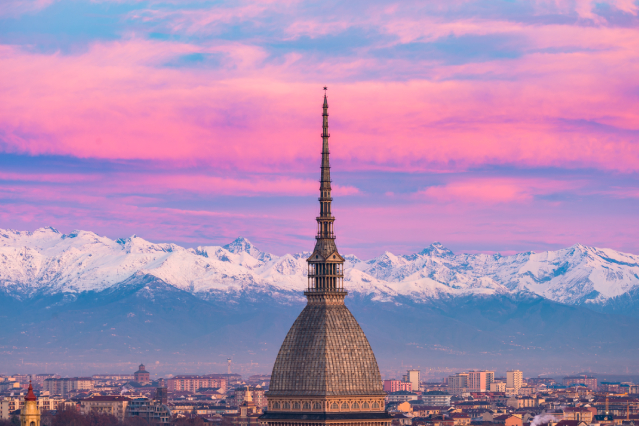
Turin
Turin is a city that surprises visitors with its unique blend of elegance, innovation, and deep-rooted traditions. As the capital of Piedmont and Italy’s first capital, Turin boasts a strong historical identity, reflected in its Baroque palaces, grand squares, and charming historic cafés that preserve the Belle Époque atmosphere.
Surrounded by the Alps and crossed by the Po River, Turin captivates with its rich cultural scene, world-class museums, and unmistakable gastronomic heritage.
A Journey Through Time: Turin’s Historic Heart
A walk through Turin’s city center reveals an extraordinary artistic and architectural heritage.
- Piazza Castello is the beating heart of the city, surrounded by some of Turin’s most important landmarks:
- Palazzo Reale – The former Savoy residence, featuring sumptuous rooms and the renowned Galleria Sabauda.
- Palazzo Madama – A fascinating blend of medieval and Baroque architecture.
- Church of San Lorenzo – A masterpiece by Guarino Guarini, one of Italy’s greatest Baroque architects.
- The Mole Antonelliana, Turin’s iconic symbol, is home to the National Cinema Museum, one of the most captivating museums in the world. From its glass elevator, visitors can enjoy a breathtaking panoramic view of the city, framed by the Alpine peaks.
- The Egyptian Museum, the second most important in the world after Cairo, houses an extraordinary collection of artifacts that narrate the fascinating story of Ancient Egypt.
- Among Turin’s most impressive churches is the Cathedral of San Giovanni Battista, which safeguards the Holy Shroud. Nearby, the Sanctuary of the Consolata, with its rich Baroque interiors and spiritual aura, is another must-visit religious site.
Turin to Experience: Nature & Innovation
Turin offers a perfect balance between urban elegance and green spaces.
- Valentino Park, located along the Po River, is a peaceful oasis featuring gardens, fountains, and the Borgo Medievale, a faithful reconstruction of a 15th-century village.
- For modern architecture lovers, the Lingotto – once a Fiat factory, now a cultural and commercial hub – houses art galleries, exhibition spaces, and the famous rooftop test track made legendary by the film The Italian Job.
- Mountain enthusiasts can easily reach the nearby Piedmontese valleys, such as Val di Susa and Val Chisone, which feature picturesque Alpine villages and renowned ski resorts.
- Just outside Turin, La Mandria Park, next to the Royal Palace of Venaria, offers vast green spaces, trekking trails, horseback riding, and opportunities to observe local wildlife, including deer, fallow deer, and rare bird species.
- The Sacra di San Michele, an ancient abbey perched on the mountains, inspired Umberto Eco’s famous novel The Name of the Rose. This mystical site, overlooking Val di Susa, offers stunning panoramic views and can be reached via scenic hiking trails.
- For a more romantic experience, the Langhe and Monferrato wine regions, famous for their vineyards and historic villages, are just a short drive from Turin. Visitors can explore prestigious wineries, taste world-renowned wines like Barolo and Barbera, and discover ancient castles and fortresses that tell the story of centuries of Piedmontese history.
Flavors of Turin: From Tradition to Refinement
Turin’s cuisine is a perfect blend of rustic tradition and aristocratic influences, offering rich, flavorful dishes that have stood the test of time.
- Bollito misto – A classic Piedmontese dish, featuring tender boiled meats served with a variety of flavorful sauces.
- Agnolotti del Plin – Small, delicate ravioli filled with meat, bursting with flavor and traditionally served with butter and sage or a hearty roast sauce.
- Bagna cauda – A warm, intense dip made with anchovies, garlic, and olive oil, served with seasonal fresh vegetables, making it a true staple of Piedmontese cuisine.
Turin is also renowned for its chocolate:
- Gianduiotti – Smooth, hazelnut-rich chocolates, the perfect gastronomic souvenir from the city.
- Bicerin – A historic hot drink, made from layers of espresso, rich chocolate, and fresh cream, originally created in the 18th century and still a symbol of Turin’s café culture today.
In Turin’s historic cafés, these timeless delicacies can be savored in an elegant atmosphere, reflecting the city’s deep culinary heritage.
Where to Stay in Turin: From Luxury to Warm Hospitality
Turin offers a wide range of accommodations, catering to every traveler’s needs and preferences.
- Luxury Hotels in the Historic Center – For those seeking a refined experience, Turin’s elegant hotels in the heart of the city provide sophisticated comfort and historic charm.
- Charming B&Bs in Local Neighborhoods – Areas like San Salvario and Vanchiglia are known for their authentic atmosphere, offering cozy guesthouses and boutique accommodations that reflect the city’s creative and lively spirit.
- Agriturismi in the Turin Hills – For a nature escape, the rolling hills surrounding the city offer tranquil farm stays with breathtaking views, perfect for a relaxing retreat.
Whether you’re looking for luxury, authenticity, or a peaceful getaway, Turin provides a perfect place to stay for every type of traveler.
Getting Around in Turin
Turin boasts an efficient and well-organized public transportation system, making it easy to explore the city.
- Buses & Trams (GTT) – The extensive GTT network covers the entire urban area and suburbs, with routes connecting all major attractions.
- Metro – Turin’s automated metro line provides a fast way to move across the city, linking the historic center to Lingotto and peripheral districts in minutes.
- Bike Sharing & Cycling – For sustainable mobility, Turin offers a bike-sharing service with numerous stations and an extensive network of cycling paths.
Book Your Bike - Car Sharing – Visitors can rent a car for short trips using car-sharing services, eliminating the need for private vehicles.
- Walking – Exploring Turin on foot is highly recommended, especially in the historic center, where arcades (portici) provide shelter even on rainy days.
- Parking & ZTL – For those arriving by car, the city has underground and paid parking areas, as well as a Limited Traffic Zone (ZTL) regulating access to the city center during peak hours.
How to Reach Turin
- By Car – Turin is well connected via major highways:
- A4 from Milan
- A21 from Piacenza
- A32 towards the Alps
- By Train – Turin Porta Nuova is one of Italy’s main railway hubs, with high-speed trains linking the city to Milan, Rome, and Naples.
- By Plane – Turin Caselle Airport is located 16 km from the city center, offering both domestic and international flights, with efficient transport links to reach downtown Turin.
- Car Sharing – Visitors can rent a car for short trips using car-sharing services, eliminating the need for private vehicles.
- Walking – Exploring Turin on foot is highly recommended, especially in the historic center, where arcades (portici) provide shelter even on rainy days.
- Parking & ZTL – For those arriving by car, the city has underground and paid parking areas, as well as a Limited Traffic Zone (ZTL) regulating access to the city center during peak hours.
How to Reach Turin
- By Car – Turin is well connected via major highways:
- A4 from Milan
- A21 from Piacenza
- A32 towards the Alps
- By Train – Turin Porta Nuova is one of Italy’s main railway hubs, with high-speed trains linking the city to Milan, Rome, and Naples.
- By Plane – Turin Caselle Airport is located 16 km from the city center, offering both domestic and international flights, with efficient transport links to reach downtown Turin.